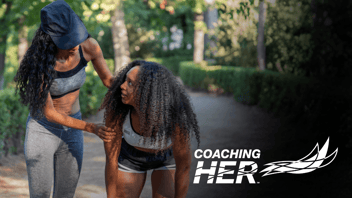
.png?width=1200&height=675&name=blog_header%20(3).png)
National Girls & Women in Sports Day is not only a time to celebrate; it’s an opportunity for leaders to intentionally reflect on how sport is serving girls and women today. The data is clear: girls who stay in sport gain lifelong benefits, including stronger mental health, deeper friendships, higher academic achievement, and career advantages later in life (Tucker Center, 2018). Yet by age 14, girls drop out of sport at twice the rate of boys (Women’s Sports Foundation, 2018). That gap isn’t about interest, it’s about experience.
Belonging is the difference-maker. Girls who feel a sense of belonging are significantly more likely to stay in sport (Canadian Women & Sport, 2022), and 70% say friendships and team connection are the reason they keep playing (Women’s Sports Foundation, 2020). At the same time, about 43% of girls who once considered themselves sporty disengage from sport as teenagers (Women in Sport, 2023). These outcomes don’t happen by chance; they reflect the environments organizations intentionally build and the level of education, training, and support coaches receive to coach girls well.
Stereotypes often show up systemically, not intentionally. When coaching approaches are built around assumptions instead of evidence, girls are more likely to feel unseen or unheard. Girls who feel heard by their coaches are 2.5 times more likely to stay in sport (Aspen Institute Project Play, 2020), and 80% of girls say a positive relationship with their coach is a top reason they keep playing (Aspen Institute Project Play, 2020). Coach education is a powerful lever for change—organizations with trained coaches see 40% higher retention among girls (Women’s Sports Foundation, 2022).
What It Looks Like to Invest in Coaching Girls
Prioritizing coaching education for coaching girls doesn’t require overhauling everything, it requires being intentional. It means recognizing that coaching girls is a skill that can be taught and strengthened, not an inherent ability coaches are simply expected to have. Organizations can start by embedding education that helps coaches understand how girls experience sport, how unintentionally stereotypes show up in language and expectations, and how creating a culture of belonging is built day to day. Creating space in regular communications, like newsletters, emails, social posts, and coach updates, to normalize conversations about coaching girls and highlight practical strategies coaches can use is a simple and effective way organizations can begin building awareness and support. Building reflection moments into coaches meetings, integrate learning into onboarding, and celebrating coaches who adapt and grow reinforces a culture that values learning and continuous improvementWhen leaders consistently communicate that learning how to coach girls well matters, coaches are more confident, environments are stronger, and girls are far more likely to stay.
References
- Aspen Institute Project Play. (2020). State of Play: Trends and Developments in Youth Sports.
- Canadian Women & Sport. (2022). The Rally Report: Encouraging Girls’ Participation and Retention in Sport.
- Deloitte. (2023). Women’s Sports: The Next Generation of Growth and Opportunity.
- Tucker Center for Research on Girls & Women in Sport. (2018). Developing Physically Active Girls: An Evidence-Based Multidisciplinary Approach.
- Women in Sport. (2023). Reframing Sport for Teenage Girls.
- Women’s Sports Foundation. (2018). The Foundation Position: Girls’ Sports and Physical Activity.
- Women’s Sports Foundation. (2020). Staying in the Game: Factors That Influence Girls’ Sport Participation.
.png?width=352&name=blog_header%20(10).png)

.png?width=352&name=champions_guide_feb2026%20(1).png)
.png?width=352&name=blog_header%20(11).png)


.png?width=352&name=blog_header%20(19).png)