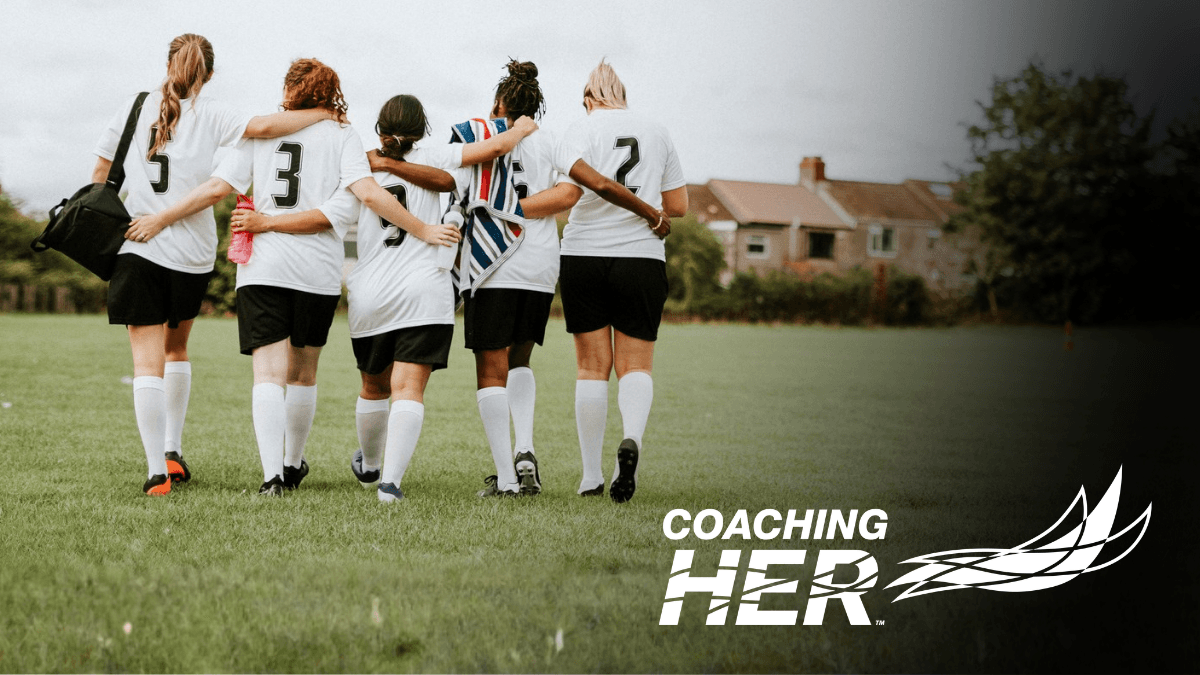
In March, we shift our focus to one of the most powerful, yet often overlooked, factors in an athlete’s journey: body image. Sport should be a sanctuary where girls build confidence, capability, and pride in what their bodies can do. However, for many, the everyday sport environment from the language used in the locker room to the cut of a uniform can become a source of self-consciousness and comparison.
As a leader, the data tells a story we can no longer ignore: Low body confidence is the #1 reason why girls leave sport (Body Confident Sport, 2023). If we want to keep girls in the game, we have to look beyond the scoreboard and audit the culture we are creating at a systems level.
The 2x Dropout Rate: A Leadership Challenge
It is a well-documented crisis in youth athletics: girls drop out of organized sport at twice the rate of boys (Tucker Center Research Report, 2018). While leaders often point to "competing interests," the root cause is frequently more personal. Data shows that 45% of girls drop out of sports because of low body confidence (Body Confident Sport, 2023).
This isn't just a local issue; it's a global phenomenon. Across the globe, girls in sport report being objectified, teased, bullied, and stereotyped as “non-sporty” because of their body types, which directly feeds into a negative body image (Matheson et al., 2023). Perhaps most striking is that 1 in 2 girls who quit sports reported being criticized about their body type (Matheson et al., 2023). When half of our departing athletes leave because they felt judged or unwelcome in their own skin, it is no longer an individual issue—it is a leadership challenge.
Auditing Your Environment: Uniforms and Representation
This pressure doesn't disappear as athletes get older or more elite. In fact, 45% of women NCAA college athletes report they are attempting to lose weight, and women athletes are significantly more likely than their male counterparts to believe they are overweight for their sport (NCAA, 2024). Despite these high-pressure statistics, many organizational systems remain gender-blind. Research indicates that 37% of sport leaders do not consider gender when determining how to allocate resources, including funds, facility access, and coaching time (Canadian Women & Sport, 2022). Leaders have the power to change this by auditing the environment: Leaders have the power to mitigate these pressures by auditing the organizational environment:
- Uniform Policies: Are your uniforms designed for performance and comfort, or do they default to masculine standards or exclusionary styles? Nearly 1 in 5 girls report that uniforms or exercise clothing negatively impact their experience, a number that rises to 1 in 3 for girls with disabilities (Canadian Women & Sport, 2024).
- Marketing and Imagery: Does your organization’s marketing only highlight one "type" of athletic body? Promoting body diversity in media and visibility helps girls realize there is a place for every body type in sport.
- Safety and Facilities: Ensuring access to private changing rooms and well-lit entryways helps girls feel physically and emotionally safe (Nike, 2020).
Training Your Staff: The Power of Shared Language
Coaches are the primary delivery mechanism for your organization’s values. They can either reinforce harmful appearance ideals or act as the ultimate shield against them. However, many coaches—despite their best intentions—lack the knowledge, confidence or language to navigate these sensitive topics.
The good news is that targeted training works. A pilot study found that coaches who took the Body Confident Coaching modules showed significantly higher confidence in navigating body image issues, as well as lower levels of fat phobia and lower gender biases (Schneider et al., 2023). By equipping your staff with a shared, professional language that emphasizes body functionality (what the body does) over appearance (how the body looks), you shift the focus back to mastery and joy.
Next Step: Roll out Body Confident Coaching to Your Entire Staff
This month, we are highlighting the Body Confident Coaching: Introducing Body Image module. This learning tool is designed to help your coaches and staff recognize the pressures girls face—from puberty and media influence to objectification and stereotypes—and provides simple, practical shifts to create a "player-ready" environment. When we prioritize a girl's individual growth over external pressures, sport remains the positive, empowering experience it was meant to be. Great coaches see potential, not stereotypes, and great leaders build the systems that make that possible.
Be HER Reason to Stay in Sport
Sources
To see all our research on Body Confident Sport visit: https://www.coachingher.com/scholarlypublications
- Body Confident Sport. (2023). Low body confidence and dropout rates in adolescent girls.
- Body Confident Sport. (2023). The impact of body criticism on girls' sport participation.
- Canadian Women & Sport. (2024). Rally Report 2024: A call to reimagine sport so all girls can play.
- Matheson, E. L., et al. (2023). Global perspectives on objectification and body image in youth sport.
- National Eating Disorders Association (NEDA). (2025). Coach & athletic trainer toolkit.
- NCAA. (2024). Student-athlete well-being study: Weight perception and weight loss attempts among college athletes.
- Nike. (2020). Coaching girls guide: How to get (and keep) girls playing.
- Schneider, J., Matheson, E. L., Tinoco, A., Gentili, C., White, P., Boucher, C., Silva-Breen, H., Goorevich, A., Diedrichs, P. C., & LaVoi, N. M. (2023). Body Confident Coaching: A pilot randomized controlled trial evaluating the acceptability of a web-based body image intervention for coaches of adolescent girls. Journal of Applied Sport Psychology.
- The 2018 Tucker Center Research Report. Developing physically active girls: An evidence-based multidisciplinary approach. University of Minnesota, Minneapolis, MN: Author.
- Women’s Sports Foundation. (2019). Coaching through a gender lens: Maximizing girls’ play and potential. New York, NY: Women’s Sports Foundation.
.png?width=352&name=blog_header%20(17).png)
.png?width=352&name=blog_header%20(13).png)
.png?width=352&name=blog_header%20(15).png)
.png?width=352&name=blog_header%20(19).png)
.png?width=352&name=blog_header%20(14).png)