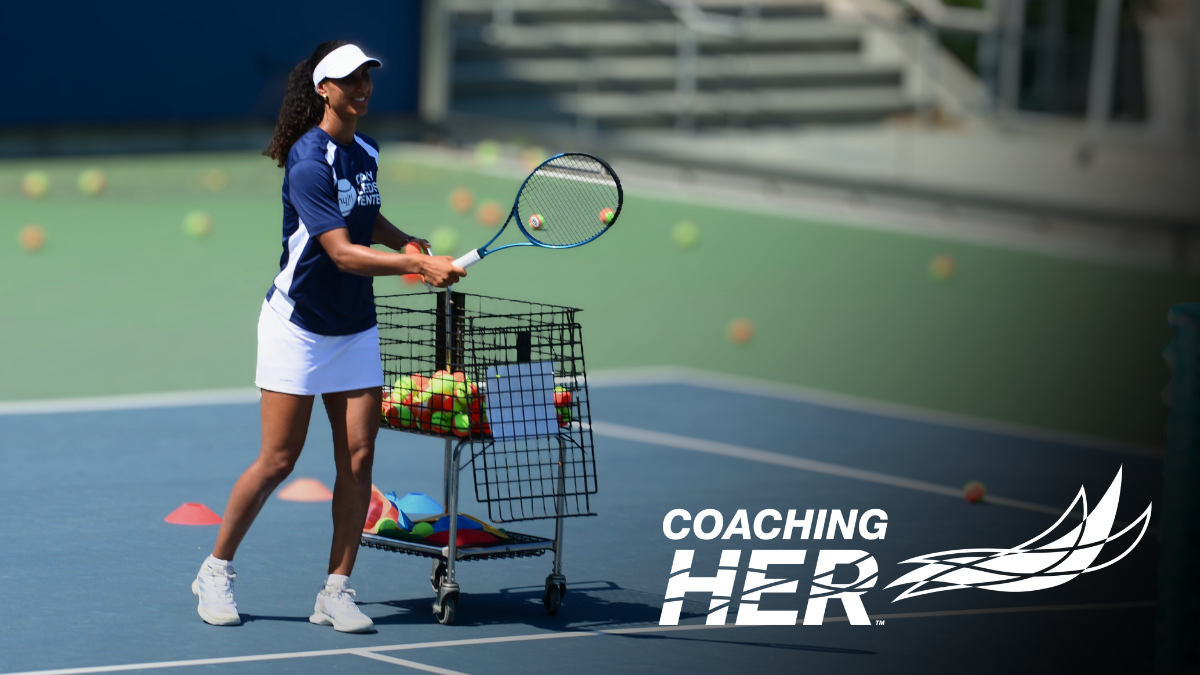
By Yesica De Lucas - Director of Junior Development at NYJTL’s Cary Leeds Tennis Center and Former NCAA Division 1 Tennis Player
I am a coach and a woman, and ever since I got my first period, I’ve been carrying pads and tampons to the restroom as if they were a secret no one could see. I don’t know when that need for secrecy started, but I am pretty sure that, in over 20 years of being an athlete, I never shared with any of my coaches when I was on my period. At home, my mother explained the menstrual cycle and what I needed to do during my period, but outside of home, I felt that menstruation could be seen as a sign of weakness simply because I was a girl. I didn’t want to appear weak, so I stayed quiet and endured. It was almost as if it was implied that I should not express any symptoms or even talk about menstruation. Since it was not considered an illness, it felt like something I was simply expected to deal with in silence.
I do not remember anyone ever guiding me or giving me advice on how to better understand or manage my menstrual cycle as an athlete. However, I do remember two comments from coaches that have stayed with me. One coach once told me that I was "like a boy" because he “could not tell when I was on my period.” What he meant was that I never complained or became overly emotional during practice, so, according to him, that was not something characteristic of girls. On another occasion, a coach mocked a boy who was losing a practice match by asking him if he was on his period. I remember replying, “I won my match against that boy while I was on my period, but nobody knew I was, and nobody ever congratulated me for it.” Moments like these were frustrating because they shifted the focus away from what truly mattered, practice, and, even worse, they made me feel as though you could never be enough simply because you were born a girl.
Now that I am a coach, I am determined to help destigmatize menstruation and create a welcoming environment for our athletes. We need to ensure that we are creating a space that is inclusive, safe, welcoming, and motivating ,both on and off the court, so athletes can focus on what truly matters: their goals. Creating a caring climate involves not only educating coaches on topics such as menstruation and equipping athletes with the knowledge and tools they need, but also showing them, often without words, that we are here to support them.
After completing the module Tackling Menstrual Taboos and Creating Period-Friendly Environments, something clicked. I realized that we needed to make a change at our tennis club. First, I shared with my team some of the most alarming statistics regarding girls in sport, including that 84% of teenagers who menstruate become less interested in sport and fitness after menarche, and 23% feel embarrassed to participate in sport during their menstrual period. I then asked whether we could provide pads and tampons in the restroom, and everyone on the team agreed that it was a good idea. Since the beginning of June, we have had a menstrual care kit available at our facility.
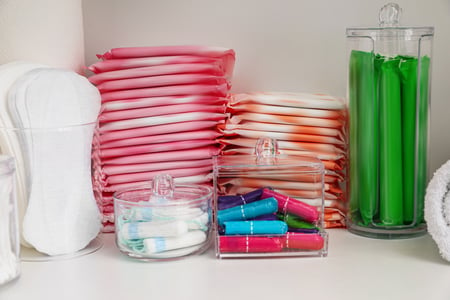 Providing pads and tampons is a silent way of saying, “We know what you are going through,” “We care about you,” and “If an emergency happens, you don’t need to worry.”
Small, silent changes often speak louder than words and can have a profound impact on athletes. The cost of providing menstrual products should not be viewed as an additional expense, but as a necessary investment in creating an environment that is welcoming, safe, and inclusive.
In addition, this August I will be giving a presentation for parents and athletes aged 10 and older to educate them about the menstrual cycle. The presentation will include the following sections:
- Understanding each phase of the menstrual cycle.
- Tips for managing different menstrual symptoms.
- What to pack to be prepared for menstruation.
- Food and training recommendations for each phase of the cycle.
- An interactive activity that encourages children to reflect on respectful attitudes and comments regarding menstruation.
Thanks to the Coaching HER® modules, I have been able to challenge some of the beliefs and behaviours I held about menstruation. Isn’t it ironic that we have first aid kits stocked with bandages, even though there is no guarantee that anyone will need one on a given day, yet despite knowing that at least one girl or woman walking into our facility is likely to be on her period, many sports facilities still do not provide menstrual products?
Instead of thinking that nobody should know I am on my period, I now believe that although nobody needs to know, it is perfectly alright if somebody does. In fact, I want younger girls to see that menstruation is completely normal; that Coach Yesica gets her period too and understands exactly how they feel.
As leaders, we have the power to change the things we no longer agree with, and I am proud that our team is moving in that direction. I know it is not always easy to find the time to prepare a presentation that may seem somewhat unrelated to coaching or to speak with managers about implementing these changes. However, if we don't do it, who will? And if we don't make a change, how can we expect anything to change?


.png?width=352&name=blog_header%20(3).png)
.png?width=352&name=blog_header%20(11).png)
.png?width=352&name=champions_guide_feb2026%20(1).png)