Most coaches would recognize bullying if they saw it. But what about the athlete who is never chosen as a partner? The one left out of team conversations? The one teammates don't intentionally exclude, but never intentionally include?
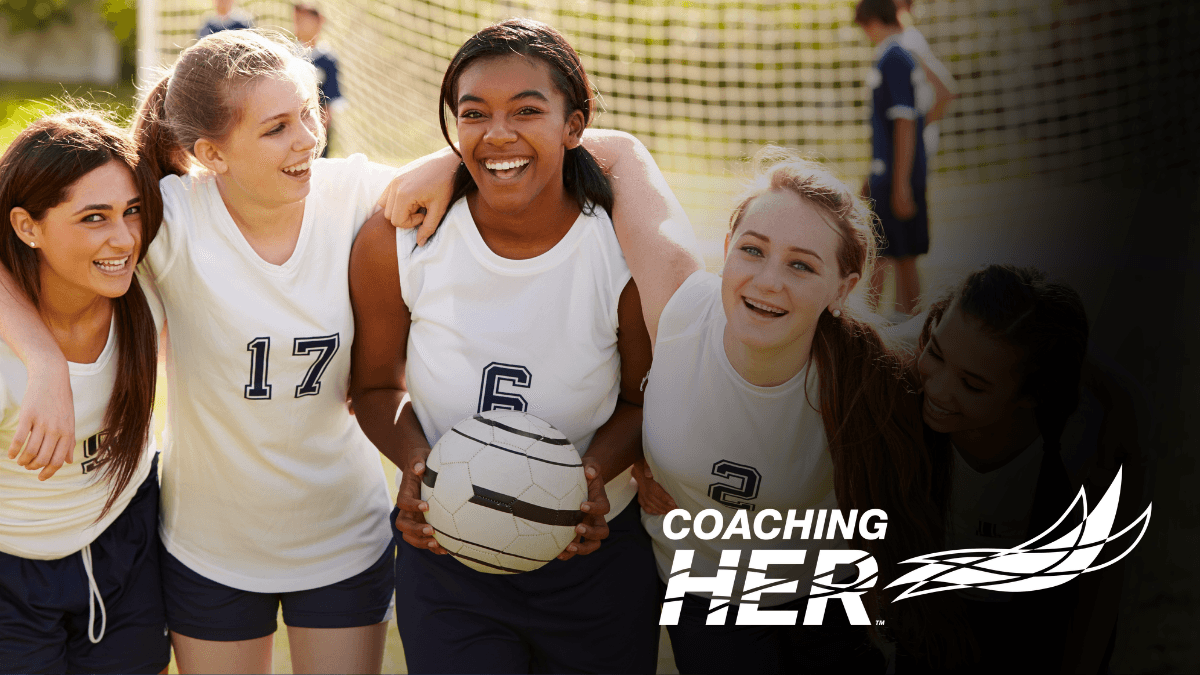
These everyday moments often go unnoticed, yet they have a big impact on whether girls feel like they belong and whether they choose to stay in sport.
Feeling accepted by teammates and building strong friendships play an important role in girls' positive youth development (Tucker Center Research Project, 2018). Yet as parents, coaches, and sport leaders, we often spend so much time focusing on skill development, scoring goals, getting faster and stronger, and winning games that we overlook one of the most powerful reasons girls stay in sport: meaningful relationships.
Girls stay in sport when they feel connected. They stay when they know they belong, when they have supportive relationships with teammates and coaches, and when they feel safe to be themselves. In fact, when sport environments foster positive team cultures and caring relationships, 90% of girls report that sport enhances their mental and emotional health, and 76% say it builds their confidence (Canadian Women & Sport, 2022).
The challenge is that belonging doesn't happen automatically. High school sports participation among girls has reached an all-time record of over 3.5 million athletes. At the same time, youth sports has exploded into a $40 billion industry, with average family spending on a child’s primary sport rising 46% over five years to $1,016 annually. With girls’ participation in sport at an all-time high, it’s more important than ever that we, as coaches and sport leaders, create environments where girls feel supported, valued, and want to stay.
68% of girls describe relationships with other girls as competitive (ROX Institute, 2023). That statistic isn't a criticism of girls, it's a reminder that the social pressures they experience don't disappear when they step onto the field or court. Sport provides a unique opportunity to teach something different. Coaches can intentionally create team cultures where kindness, collaboration, empathy, and mutual respect become the norm.
Coaching HER®'s Caring Climate Course will equip coaches and leaders with practical, purposeful strategies to shape team environments where every girl feels like she belongs, helping turn today’s record participation into lasting participation.
TRY THIS!
Coaches: Pair girls with a teammate they don’t usually connect with. Have each pair warm up together and challenge them to find three things they have in common or learn three new things about each other. Continue creating new pairs or small groups during future practices so girls have opportunities to build connections with different teammates.
Leaders: Review your organization's communication systems, social activities, and traditions to identify and remove practices that may unintentionally leave girls out.
References
Canadian Women & Sport. (2022). The Rally Report: A Call for Better, Safer Sport for Girls.
Hinkelman, L. (2023). The 2023 Girls' Index by Ruling Our eXperiences. Columbus, OH: Ruling Our eXperiences, Inc.
National Federation of State High School Associations (NFHS). Led by Girls Flag Football and Girls Wrestling, High School Sports Participation Increases for Fifth Consecutive Year. September 10, 2026.
The New York Times. Youth Sports, Once a Community Affair, Are Becoming Big Business. July 9, 2025.
Project Play. Project Play Survey: Family Spending on Youth Sports Rises 46% Over Five Years. February 24, 2025.
Tucker Center for Research on Girls and Women in Sport. (2018). 2018 Research Report: Developing Physically Active Girls: An Evidence-based Multidisciplinary Approach.

.png?width=352&name=blog_header%20(6).png)


.png?width=352&name=blog_header%20(21).png)